whats it like to be an f16 pilot
G-forces don't translate to the big screen, or to video games, but they are a major aspect of flight fighters. Movies like Elevation Gun show the characters hands moving effectually the cockpit while chatting on the radio during a dogfight. In reality, during a abrupt turn under peak G, you're spending the majority of your effort pancaked into your seat, trying not to laissez passer out.
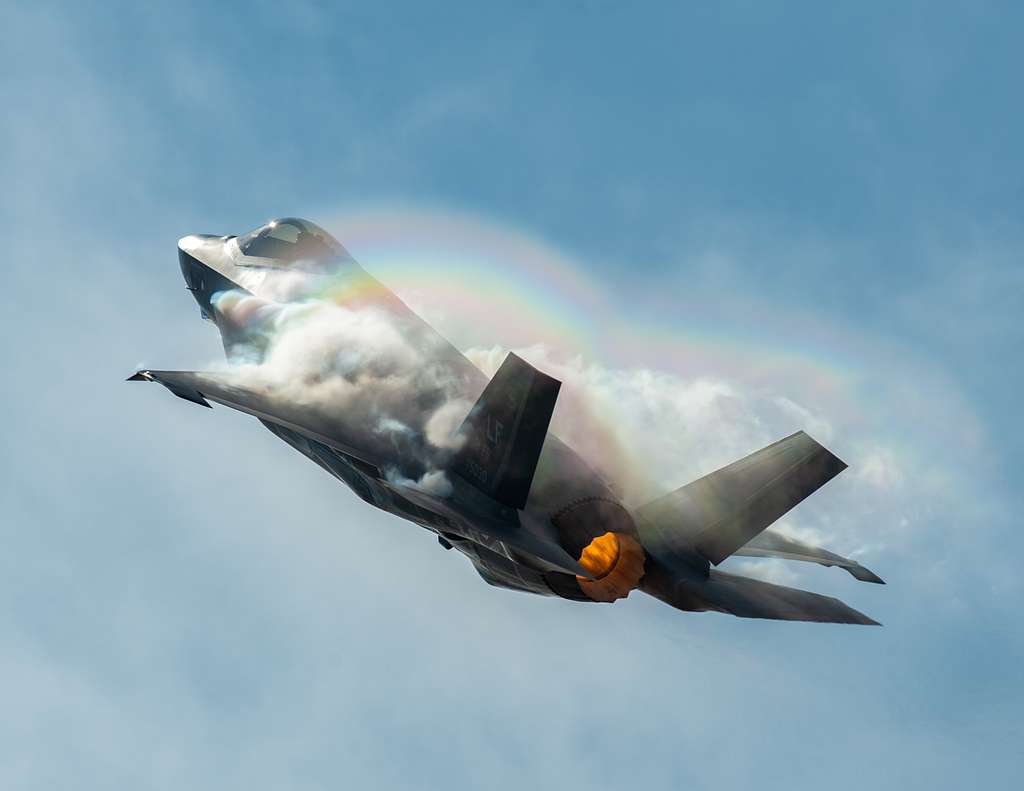
Right now, as you're reading this, you're probably at 1G, or one time the forcefulness of gravity. Your weight is what you run across when you stand on a calibration. I weigh approximately 200 pounds, 230 with my gear on. For most people, the peak K-force they've experienced is probably on a rollercoaster during a loop—which is about three-4G's. Information technology's enough to push button your head downward and pin your arms by your side. Modernistic fighters similar the F-xvi and F-35 pull 9G's, which translates to over two,000 pounds on my body.
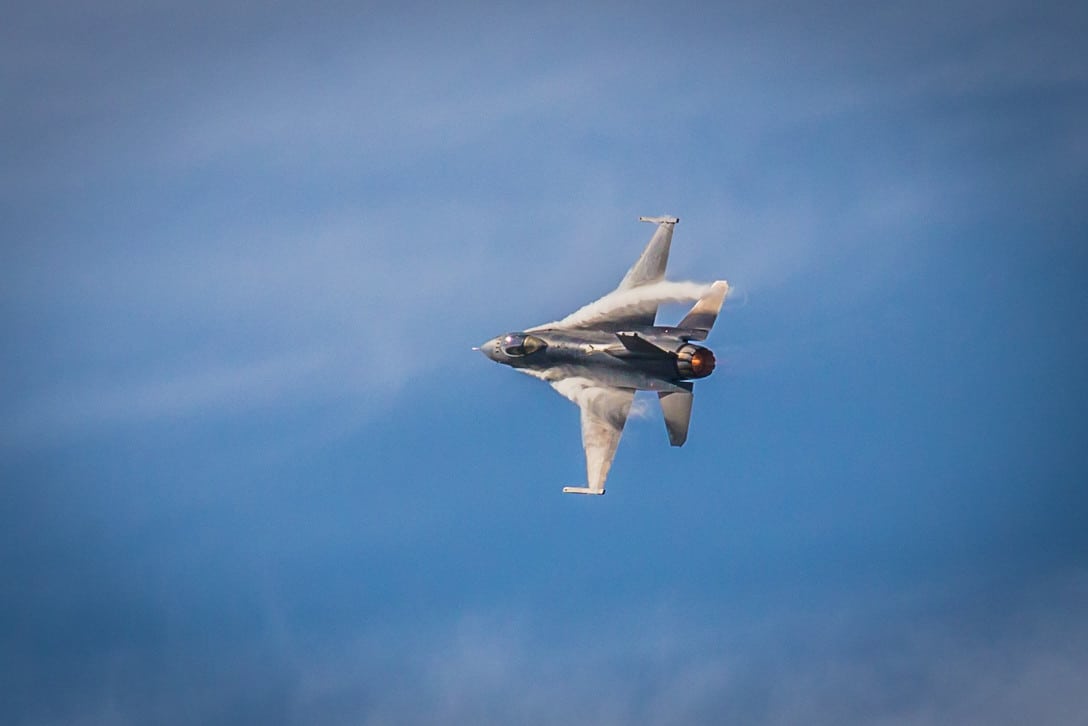
Under 9G'southward, the world appears to shrink until it looks similar you're viewing it through a toilet newspaper roll. Blood is beingness pulled out of your head towards your legs and arms, resulting in the loss of peripheral vision. If too much blood is pulled out, you lot'll pass out, resulting in incapacitation for around half a minute. Due to the speeds we fly, there's a high probability the jet volition crash before y'all wake up.
Every bit a fighter community nosotros, unfortunately, have had more than i death per year, due to M's, for the last 30+ years. This has led to a multi-pronged "systems mindset" for preparing pilots to endure them.
The first step in combating Grand's is the Anti-G Straining Maneuver (AGSM). Through a combination of special breathing and tensing our lower body we tin can squeeze the blood back into our head. This not merely prevents us from passing out, but increases our peripheral vision, which is critical during a dogfight.
The AGSM requires a high amount of physical workout. We spend a lot of time in the gym, working out our lower bodies, so nosotros can push the claret against the force of gravity during high-One thousand maneuvers. Considering our flights boilerplate one to ii hours, cardiovascular fitness is important every bit well. During my time in the F-16, I gave a dozen, or so, people backseat rides—later the flying, due to exhaustion, every i of them had to be helped out of their seat.
Hydration and nutrition also play an important function in the amount of G'due south a pilot can handle. Studies have shown that with but three per centum dehydration, Grand-tolerance fourth dimension can be reduced past upwardly to l%. As with any athletic attempt, it's important we eat nutritious foods and avoid high sugar "junk food."
Slumber is also a contribution gene to G-tolerance. Poor slumber decreases alacrity and G-sensation, which is what signals a pilot to showtime their G-strain. In fact, information technology's and so important that we're legally required to go into coiffure rest 12 hours before a flight, with an uninterrupted 8 hours to sleep.
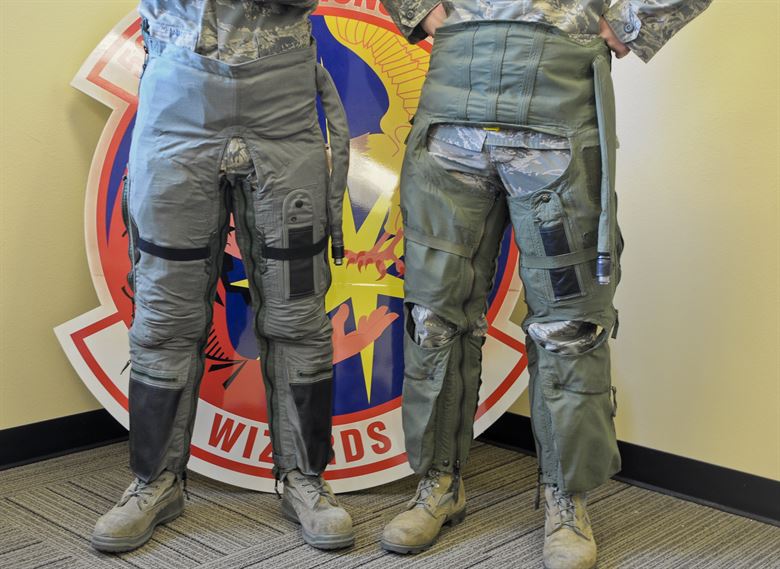
Over the years, engineering science has allowed us to pull more G'southward for longer amounts of time. We wear G-suits, which are pants with air-bladders in them. As we enter a plough, the bladders inflate, squeezing our legs and preventing blood from rushing towards our feet. To increase endurance, nosotros have pressure-breathing, which forces air into our lungs during high-Chiliad's. Instead of struggling for a breath, with what feels like an elephant on our chest, we tin can take a small sip of air and rely on the pressure-breathing to fill our lungs.
After high-Thou flights, my artillery and legs will have what appears to be chickenpox—blood has pooled in my extremities and caused the claret vessels to rupture. It's similar to a bruise and usually dissipates within a few days. The long term effects of high-G'due south can result in neck and dorsum bug—most pilots deal with some level of general pain due to Thou's.
With our helmets on, over 135 pounds of force is practical to the cervix at 9G's. In my squadron of 30 people: one pilot is unable to fly while his neck heals, some other has been told by the flying doctor that he has the spine of someone in their mid-fifties (he'due south 39), and another is only able to fly depression-One thousand sorties. A few months ago, I had to go 10-rays on my back to determine if I'd damaged a vertebra. Every bit a community, nosotros've started to introduce concrete therapy and dedicated stretching routines after each flying, in order to extend our careers.
I often go asked why we can't practise all of our training in a simulator—1000's are one of the reasons why. Information technology's one thing to make decisions sitting on the footing, it'southward some other when you feel the world endmost in as the blood is being drained from your caput. One of the sayings we have in the fighter community is: as soon every bit y'all put the helmet on, you lose 20 IQ points. During a max operation turn, without extensive preparation, information technology's probably a lot more than.
Make sure to bank check out F-35 Pilot Justin "Hazard" Lee's podcast: The Professionals Playbook!


Hasard Lee
Source: https://www.sandboxx.us/blog/g-forces-and-fighter-pilots-whats-it-like-to-pull-9gs/

Post a Comment for "whats it like to be an f16 pilot"